24/7 Water Damage Restoration in Highland Park
When water is spreading through your Highland Park home right now, Highland Park Water Restoration delivers fast, around the clock emergency response across Lake County. IICRC certified technicians handle the full job, extraction through reconstruction, and coordinate directly with your insurance carrier.
If the phone rings out, you'll hear back from us within 15 minutes.


Water emergency in Highland Park? Highland Park Water Restoration dispatches IICRC certified crews 24/7 for water extraction, flooded basement cleanup, burst pipe response, and complete structural drying, with every step documented for your insurance claim. Call (765) 436-6771.
- Services: water damage restoration, basement flooding, sewage cleanup, storm damage
- Service area: Highland Park, Johnson County, IN and surrounding areas
- Response time: Same day for Highland Park inquiries; 24/7 emergency service available
- Licensed and insured (License #RC21100059)
- Serving Highland Park, IN since 2018
Schedule Your Free Damage Assessment
Our Highland Park inspection is a room by room walkthrough that maps every place water has traveled, not just where it is visible. Walls are read with non penetrating meters at multiple heights, then confirmed with a penetrating probe where readings spike. We pull baseboards and trim when needed, check subfloors and insulation in suspect cavities, look behind cabinets and appliances, under sinks, around water heaters and washing machines, and walk the full basement perimeter and slab joints. Thermal imaging maps hidden moisture behind finished surfaces, a hygrometer reads ambient conditions, and every finding is logged. This matters because the most expensive problem in water restoration is not the obvious puddle, it is the trapped moisture in a Highland Park wall cavity that feeds mold growth a month later.
I agree to be contacted by Highland Park Water Restoration regarding my inquiry.
Storm season puts Highland Park basements underwater every year. Overwhelmed sump pumps, saturated ground, and window well flooding send homeowners searching for flooded basement cleanup companies at the worst possible hour. Fast, professional water extraction protects the foundation level of your biggest investment.
Crawl spaces and basements dry differently than living areas: cooler, damper, and slower. Proper Highland Park below grade drying pairs extraction with heavy dehumidification and, where needed, vapor barrier work, so the space stops feeding humidity into the whole house.
Water damage help near Highland Park should mean actually near: local dispatch, local crews, and a company answerable to the same community it serves. Storm chasers leave after the season. The local number keeps working.
Payment Options That Work for You
A water loss is rarely a planned expense. Our lender partners offer terms that fit a range of budgets so you can move forward while insurance settles. Ask Highland Park Water Restoration for current rates.
Pay for your project at a later time, but lock in today's pricing. Ideal for homeowners waiting on insurance settlements.
- No payments for 12 months
- No interest if paid in full
- Lock in current pricing today
Divide your project cost equally across 12 months with zero interest. Most homeowners choose this option for predictable budgeting.
- Equal monthly payments
- 0% interest for 12 months
- Simple, predictable budgeting
Spread your investment over up to 20 years with fixed equal payments. The right choice for larger projects or homeowners who prefer lower monthly amounts.
- Up to 20-year terms available
- Fixed equal payments
- Ideal for larger restoration projects
Subject to credit approval. Ask your project lead for current terms and promotions.
Every Water Damage Restoration Service We Offer in Highland Park
From the first emergency call to the finished repair, Highland Park Water Restoration documents each step of the work in your home.
Water Damage Restoration in Highland Park
Serving Highland Park: full scope residential water damage response, from initial extraction and structural drying through reconstruction. Handles supply line breaks, appliance failures, leaks, and overflow events.
Learn moreBasement Flooding in Highland Park
Extraction, drying, and restoration of flooded basements in Highland Park homes, including saturated drywall, flooring, insulation, and contents affected by groundwater or interior water sources.
Learn moreSewage Cleanup in Highland Park
Serving Highland Park: category 3 cleanup of sewage backups and contaminated water events, with sealed containment, contaminated material removal, antimicrobial treatment, and full restoration under IICRC S500 protocols.
Learn moreStorm Damage in Highland Park
In Highland Park, response to storm driven water intrusion, including basement flooding from heavy rain, window well overflow, and water entering through storm damaged exterior openings.
Learn moreCommercial Water Restoration in Highland Park
Water damage restoration for Highland Park commercial properties, scaled to retail, office, and multi tenant buildings, with after hours work coordination to limit business disruption.
Learn moreCommercial Flood Damage Cleanup in Highland Park
For Highland Park addresses, large scale extraction and drying for commercial flood losses, including warehouse, retail, and office spaces affected by storm flooding or major interior water releases.
Learn moreCommercial Sewage Cleanup in Highland Park
Serving Highland Park: category 3 sewage cleanup for commercial buildings, with full containment, contaminated material removal, antimicrobial treatment, and documentation for insurance and health code purposes.
Learn moreCommercial Mold Remediation in Highland Park
For Highland Park addresses, mold remediation for commercial properties following IICRC S520, including containment, HEPA filtration, controlled removal of affected materials, and post remediation verification.
Learn moreCommercial Storm Damage in Highland Park
In Highland Park, commercial storm damage restoration covering water intrusion, structural drying, contaminated material removal, and reconstruction to return the property to operating condition.
Learn more
Local Expertise, Real Results
Every Highland Park job documented, measured, and dried to standard before reconstruction begins.
Highland Park water emergencies do not keep business hours, so neither do we. When you call, a person answers. We aim to get a licensed crew to you within 2 hours, day or night, and we tell you on the call if it will run longer. The crew sizes up the damage before any equipment goes down. License #RC21100059.
Highland Park Water Restoration serves Highland Park homeowners with residential and commercial water damage restoration, covering the city and the surrounding Lake County communities of Hammond, Munster, Griffith, Schererville, Dyer, and Merrillville. Our crews are experienced technicians, not temp work crew, working on a licensed and insured operation with IICRC certified technicians leading every job. Years of restoration work across the Calumet Region have given us a clear read on what Highland Park homes need, particularly the post war ranches and split levels with full basements that define most neighborhoods here. When you call, you reach a restoration company that treats your home like a job that has to be finished right, not a ticket to be passed along.
Every Highland Park project follows the IICRC S500 standard for water damage restoration, and any mold work runs to the IICRC S520 standard. That means a structured process: initial moisture assessment with thermal imaging and meter readings at multiple wall heights, controlled extraction of standing water, structural drying with monitored air movement and dehumidification sized to the affected square footage, antimicrobial application where contamination is present, and post drying verification that materials have returned to dry standard before any reconstruction begins. The point of the standard is simple. You do not want surprise mold blooming behind a freshly painted wall 60 days from now.
Our Promise
We make three commitments to every Highland Park homeowner who calls. First, fast emergency dispatch day or night through our 24/7 emergency line, because every hour without extraction expands the damage. Second, IICRC certified technicians trained to the S500 standard on every job, with the equipment to back it up. Third, a free on site inspection before any work starts, and full coordination with your insurance carrier if you have an active claim. Straightforward work, plainly explained.
Why Highland Park Property Owners Call First
IICRC certified technicians, full documentation, and clear scope from the first inspection through final walk through on every Highland Park job.
Around the Clock Emergency Response
Burst pipes do not wait for business hours, and neither do we. Our 24/7 emergency line dispatches certified crews to Highland Park properties day or night, with extraction equipment, dehumidifiers, and air movers already loaded on the truck. The faster water leaves the structure, the less material has to be cut out later.
IICRC Certified Technicians
Every job is led by an IICRC certified technician trained to the S500 water damage standard. In practice, that means proper Category determination, documented moisture readings, drying to a verified dry standard rather than a guess, and antimicrobial protocols when contamination is present. The certification protects your home from shortcuts.
Mitigation Through Rebuild
Highland Park homeowners get one crew from the first extraction pass through the final coat of paint. Drywall, flooring, trim, cabinets, and finish work are handled in house, so the job does not stall waiting on a separate general contractor after the dryers come out. One company, one project, finished.
Insurance Coordination
We document every Highland Park loss the way carriers expect: photos before mitigation, written moisture maps, daily readings, scope tied to coverage. Then we work directly with your insurance carrier and adjuster so the claim moves cleanly. You focus on your household, we handle the paperwork.
Real Jobs. Real Results.
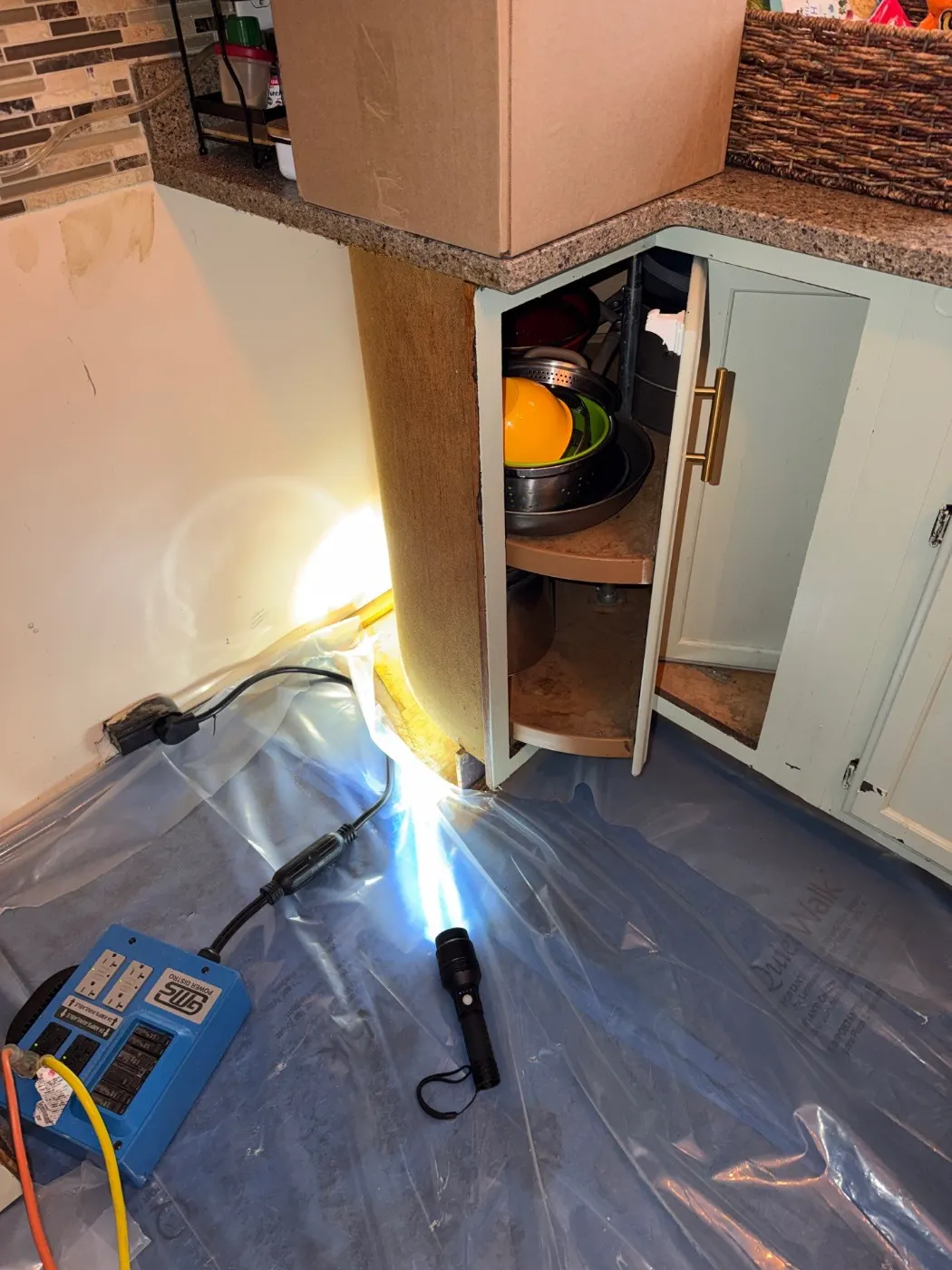
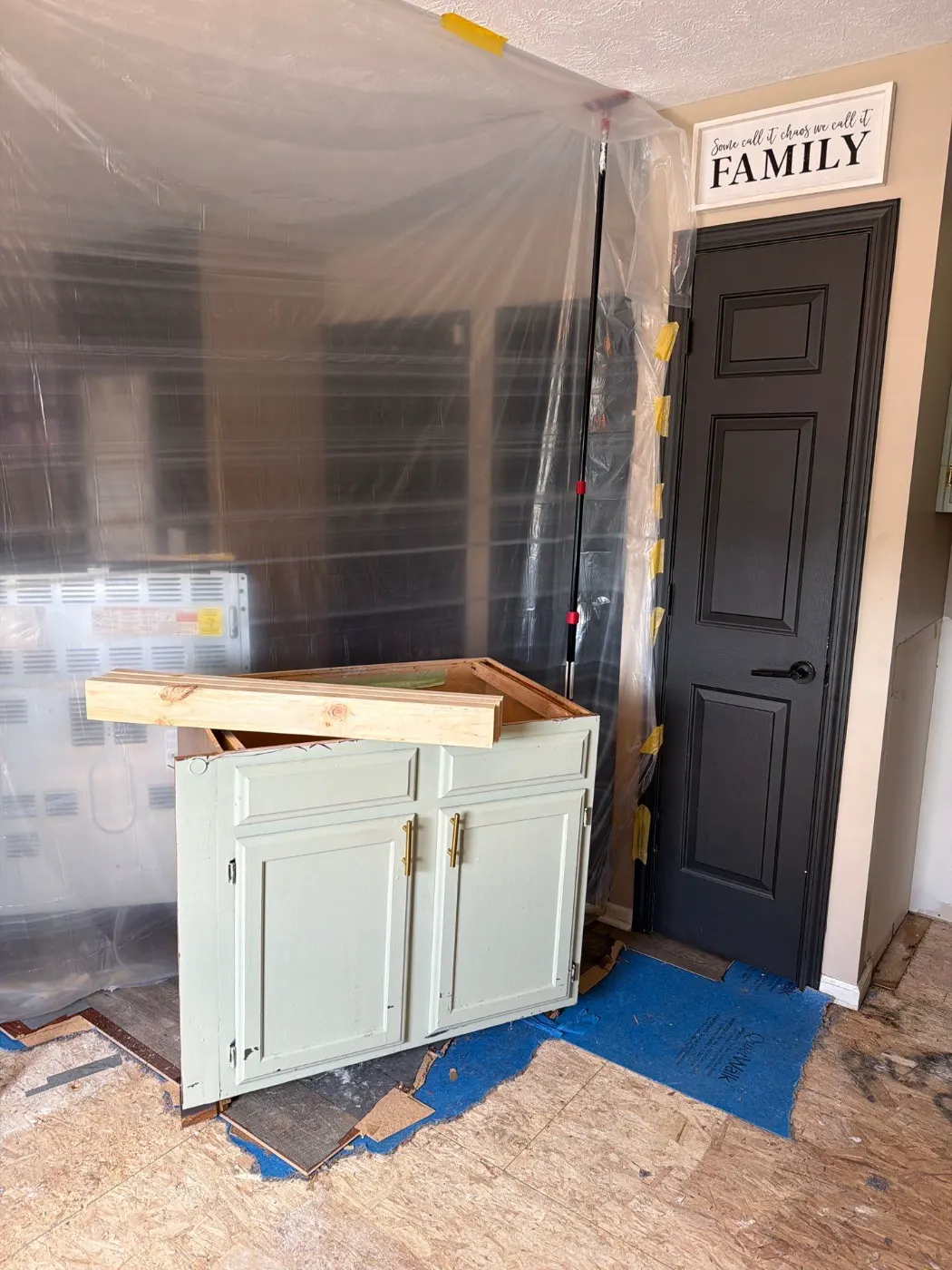
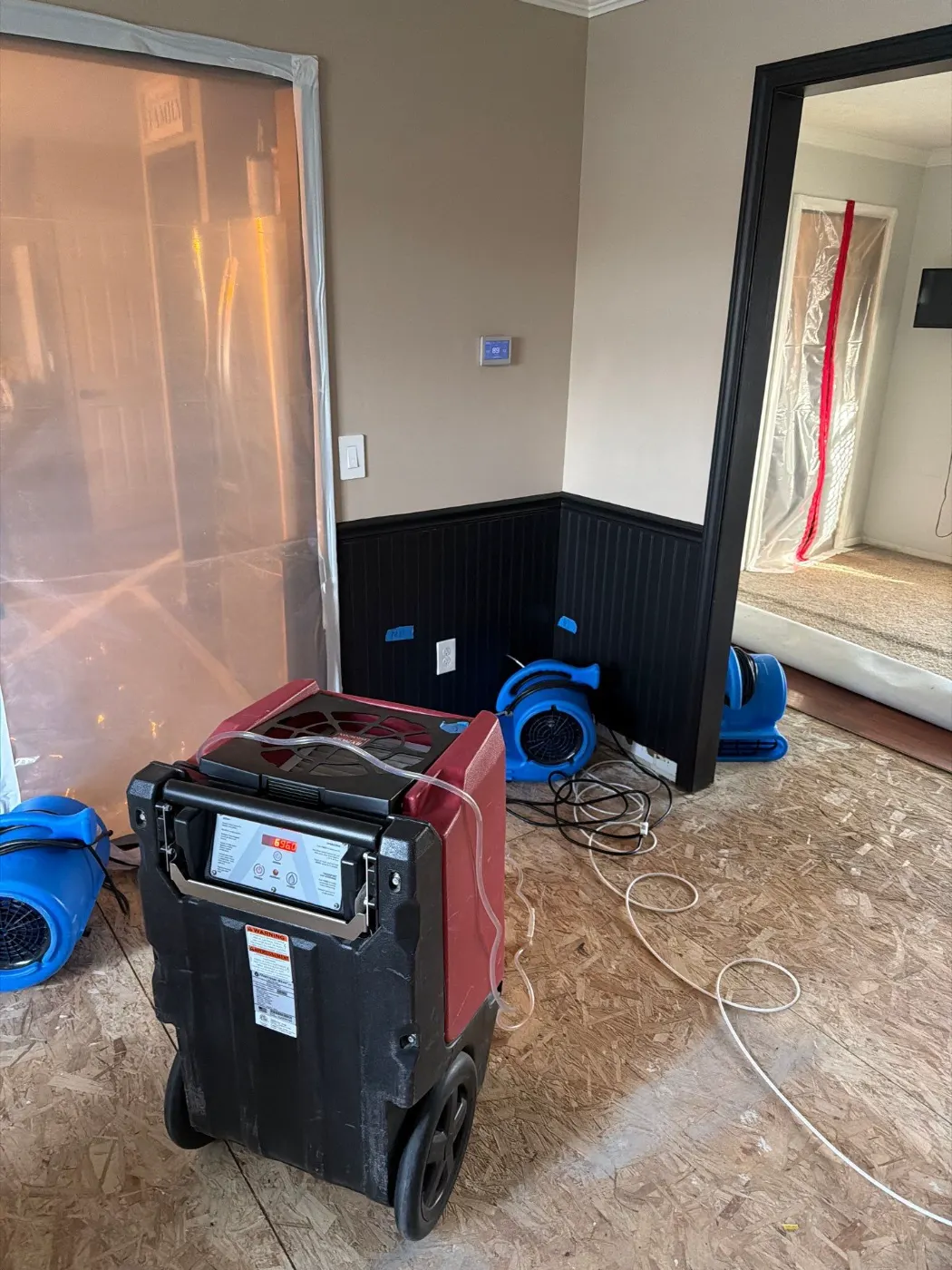
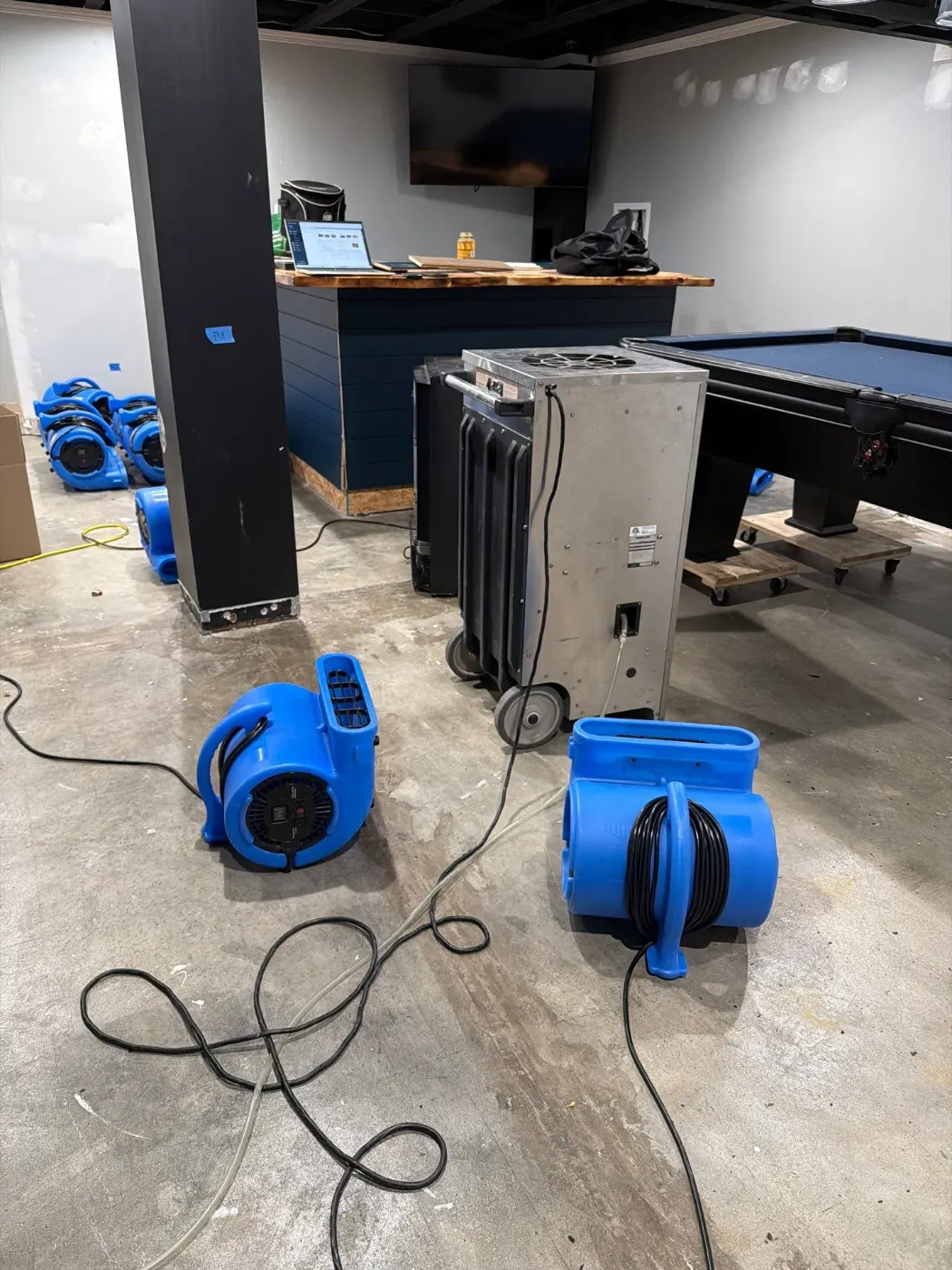
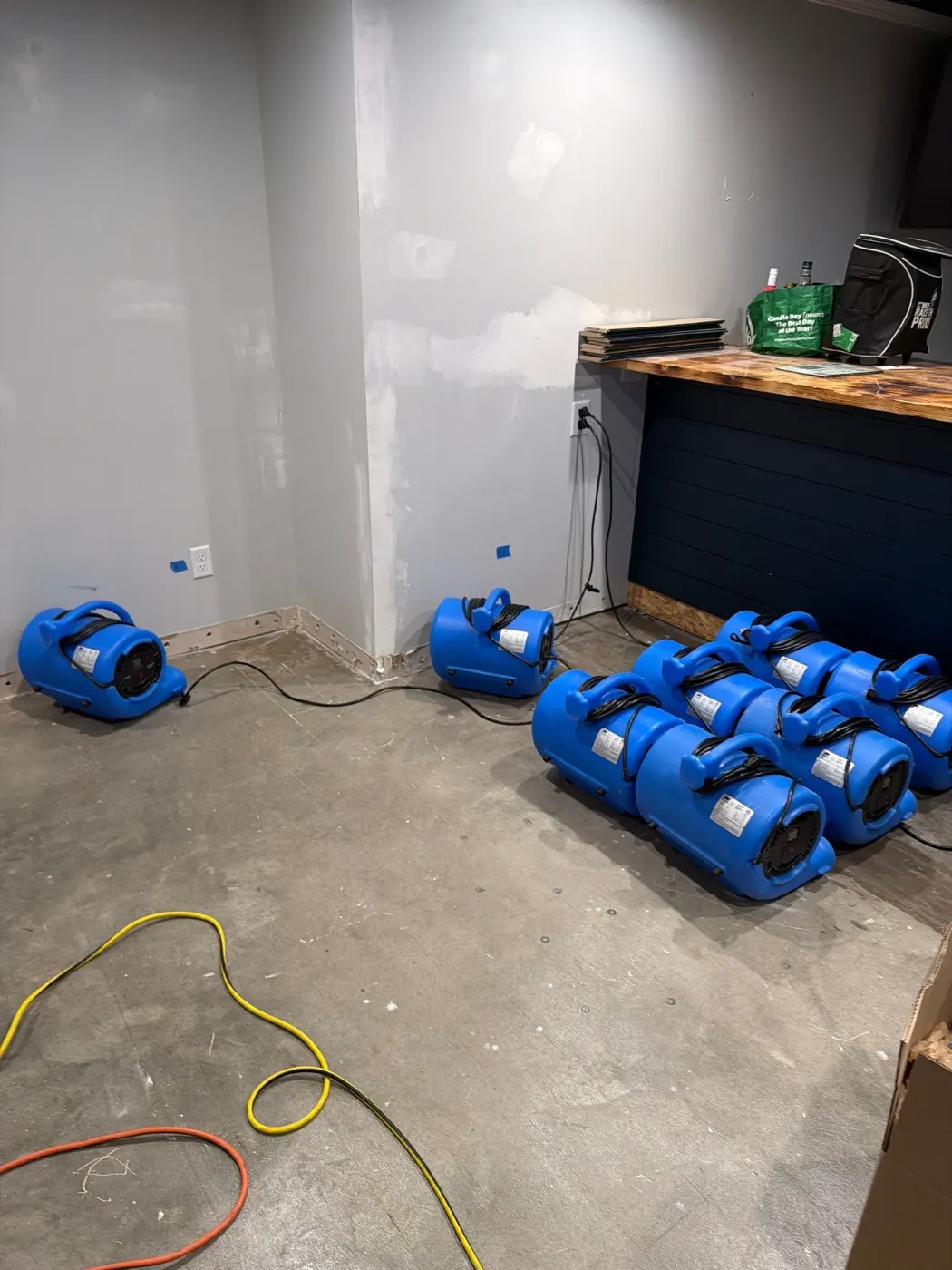
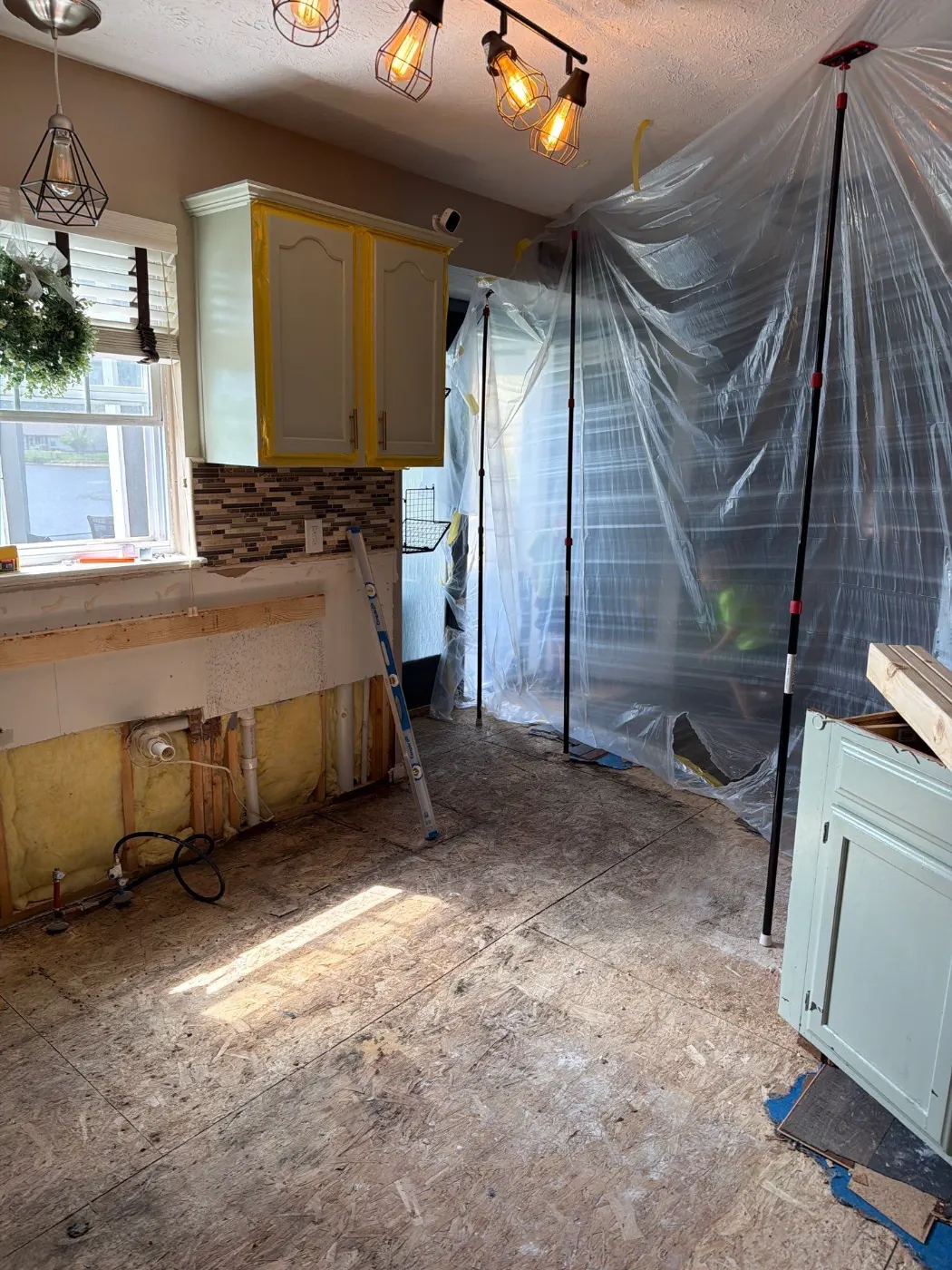
Real water damage jobs from Highland Park and across Lake County, residential and commercial, photographed at extraction, drying, and reconstruction phases.
Four Steps to a Dry Highland Park Home
The first phase on any Highland Park job is moisture assessment and Category determination. Our certified tech walks the property, runs thermal imaging across affected surfaces, takes meter readings on walls, floors, and ceilings, and traces the source, whether a broken supply line under a sink, an appliance failure, sewage backup, or storm intrusion through a basement window well. Water is then classified per IICRC S500 as Category 1 (clean), Category 2 (gray), or Category 3 (black), and the full scope of affected materials is mapped before any drying equipment is set. This assessment typically takes one to two hours.
Once the scope is documented, we move into insurance coordination. Before mitigation begins, we capture photo and video documentation of every affected area, log meter readings into a written moisture map, and open a direct line with your insurance adjuster. Scope of work is matched to your coverage, mitigation steps are justified per IICRC standard, and the file is built to the carrier's expectations. Most Highland Park homeowners never see the paperwork side of this, we handle it with the carrier directly so the claim does not stall mid project.
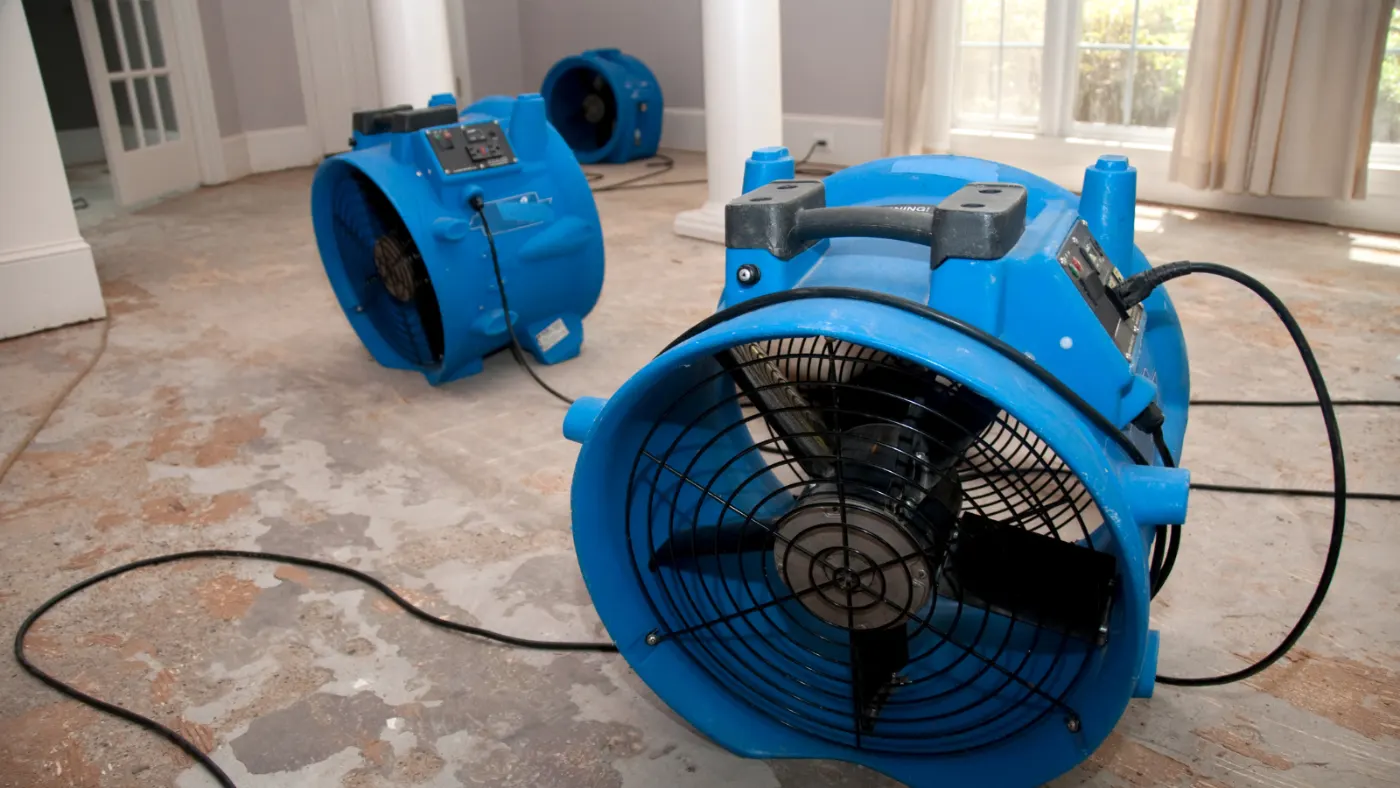
The third phase is drying execution and controlled reconstruction. Air movers and dehumidifiers are placed based on structural drying calculations matched to the affected square footage, then monitored daily with logged readings until materials hit dry standard against unaffected baselines. Controlled demolition happens only where materials cannot be saved. Then reconstruction begins: drywall, insulation, flooring, paint, trim, cabinetry, and finish work to return the Highland Park home to pre loss condition. The work is done in sequence so the home is not sitting open between phases.
Rapid Emergency Dispatch
When you call our 24/7 line, a certified tech is routed to your Highland Park address with extraction equipment, dehumidifiers, and air movers already on the truck. No second trip for gear. Extraction starts as soon as the assessment confirms scope, because standing water continues to wick into materials every hour it sits.
Category Determination
Following IICRC S500 protocol, water is classified as Category 1, 2, or 3 based on source and contamination. Meter readings are logged, the source is identified, and a written scope is built before equipment is placed. This determines whether materials can be dried in place or have to be removed.
Insurance Partnership
We work with your insurance carrier and adjuster, not around them. Photo documentation, written moisture maps, and scope justification are submitted so the claim is supported. You get clear communication on what is covered and what is not, with transparent invoicing at the end.
Verified Dry Standard
Drying is not finished when the floor looks dry. Daily moisture readings are logged on affected materials and compared against unaffected baselines in the same structure. Only when readings confirm the dry standard is met do we pull equipment and move into reconstruction.
Common Water Damage Causes in Highland Park
Washing Machine Hose Burst
An overflow during a wash cycle puts detergent water into the structure, which reads as Category 2 under IICRC S500. That changes what gets dried and what gets removed, and it is the reason the water gets classified before equipment goes in.
HVAC Condensate Line and Pan
The secondary pan under an attic unit is a warning device, not a solution. If it is holding water, the primary line is already blocked. Highland Park homes find this out in July, usually as a brown ring spreading across a bedroom ceiling.
Roof Leak Reaching the Ceiling
A ceiling that bulges is holding water above it, and standing under it to poke a hole is how people get hurt. We relieve it in a controlled way, extract what comes down, and pull the soaked insulation, because insulation that has been saturated does not dry in place.
Slab Leak Under the Floor
A supply line under a slab can leak a long time before anything looks wrong. The early signs are a warm patch on the floor, a water bill that climbed for no reason, or one section of flooring that lifted while everything around it stayed flat.
Sump Pump Failure
The single most common call we get from Highland Park homeowners. Power outage during a storm, pump motor burns out, or the float switch fails. By the time you notice, the basement has 2 to 6 inches of water.
Downspouts Discharging at the Foundation
Extensions are the cheapest prevention there is. Get the discharge several feet out and downhill, keep the grade sloping away from the house, and most of the seepage calls stop coming.
What Homeowners in Highland Park Should Do in the First Hour After a Leak
If you just found water in your Highland Park home, shut it off at the source first and keep everyone away from anything electrical. Then go through the rest of these steps in order while our crew heads your way.
1. Close the main valve first
Find the main shutoff and close it all the way. A round handle turns clockwise, and a lever handle turns so it sits across the pipe. If the valve won't move, your water utility can usually shut off service at the meter.
2. Stay clear of anything electrical
Stay out of any room where water has reached outlets or extension cords. If the breaker panel is dry and you can reach it without standing in water, switch off the breakers for the wet area. If you can't reach it safely, call your electric utility.
3. Keep everyone on dry ground
Set up a spot in a dry part of the house for kids and pets while you work through this list. Floodwater and sewage both carry germs, and wet stairs and floors are easy to slip on.
4. Save the paperwork
Deeds and family records are hard to replace, so move them to a dry room before anything else. Put them in a plastic bin or a sealed bag if the rest of the house is damp.
5. Pull up rugs and mats
Wet area rugs and bath mats hold water against the floor. Roll them up and move them to a garage or a dry room, and set any furniture that stays behind on foil squares to keep stains off the carpet.
6. Leave wet drywall and carpet in place
It's tempting to start pulling things out, but leave wet drywall and carpet where they are. Our crew takes the damage photos and moisture readings before anything is removed, and that record goes into your photo report.
7. Wipe down what you can
Wipe water off wood furniture and counters with dry towels, and set wet cushions on their sides so they drain while you wait for the crew. Keep the towels you use in a bucket or the tub so they don't soak another floor.
8. Make the call early
Waiting until morning gives the water all night to soak into floors and walls. Our line is open 24/7, so call once the water is shut off and everyone is safe.
Once the water is off and everyone is somewhere dry, call us and we'll get a crew headed to your Highland Park home with the extraction and drying equipment on the truck.
Three Simple Steps
Every job starts with a phone call and ends with readings that show the house is dry.
The Response
Emergency calls skip the queue, and a crew is dispatched within 2 hours. Nothing gets ordered after arrival, because the gear is already there. Fast response is the whole reason the line stays staffed.
Inspection Phase
The documentation is yours to keep, claim or no claim. The map tells us what dries in place and what has to come out.
Dried to Spec
The same company that dried it hangs the drywall back. The job is done when Highland Park readings prove it, commonly 3 to 5 days.
What the Photo Report Shows Highland Park Homeowners
The photo report lets you see the damage for yourself, room by room, with the crew's photos and the readings behind every recommendation we make in your Highland Park home. It starts on the first visit and grows as the drying goes.
The starting point
Every report opens with the starting point of the leak, photographed before anything is moved. Water that came from outside, like a window well or a storm, gets noted the same way, with photos of where it got in.
What a thermal camera shows
A thermal camera picks up the cooler surfaces that wet materials leave behind. When the crew uses one, the images go in the report next to the meter readings that confirm what the camera found.
Pictures from start to finish
Photos go into the report at each stage of the job, starting with the damage the crew found when they first walked in. By the end, you have a visual history of the room from wet to dry.
Saving what can be saved
Drying in place is usually less disruptive than tearing out and replacing, and the readings show when it's possible. The report notes what the crew is drying in place and what it plans to remove, with photos of both.
Daily readings while it dries
While the equipment runs, the crew comes back to take new readings, and those go into the report too. You can follow the numbers as they drop and see which rooms are closest to finished.
Seeing it for yourself
The point of the report is that you can see the damage for yourself. We show you the same photos and readings the crew used, and you can ask about any of them before the work goes further.
A record that's yours
Keep the report with your home records. We document damage with a photo report and walk you through what we found, so you can decide with your insurance company. Your policy will say what's covered, so read it before you call them.
The first photos and readings happen on day one, so call as soon as the water is off and everyone is safe.
Questions Worth Asking Before Work Starts in Highland Park
Ask any restoration company in Highland Park these questions before you sign a work authorization.
Does my policy require a certain company?
Ask your adjuster before you sign anything, and read the work authorization so you know what you're agreeing to.
What happens if you find mold?
Ask how mold behind walls or under floors gets handled, and whether that work is priced apart from the drying.
Who handles repairs after drying?
Ask who replaces drywall, flooring, paint and trim once the structure is dry, and whether one company can do both stages.
Who will be working in my home?
Ask whether the crew works for the company you called or for a subcontractor, and who's in charge on site each day.
How will you show me it's dry?
Ask for moisture readings on the first visit and the last one, so you can see the numbers reach dry standard.
Can I see an itemized estimate?
Ask for every line item in writing. Many insurers price water losses in Xactimate, so an estimate in that format is easier for an adjuster to review.
Indiana Weather Drives Restoration Calls Year Round
Indiana weather drives a predictable rhythm of water damage calls across Highland Park. January and February bring frozen supply line bursts in mid century homes. Spring rain saturates the flat Calumet terrain and pushes groundwater through basement walls. Summer thunderstorm cells overwhelm yard drainage and window wells, often within 2 hours.
Winter Pipe Bursts
Northwest Indiana cold snaps drive supply line freezes in older Highland Park homes, especially in exterior walls and unheated basement runs. Galvanized and early copper lines common to mid century housing stock split when ice expands inside. When a frozen line lets go at 2 AM, we extract, dry the cavity, and rebuild the affected wall.
Spring Saturation Flooding
Heavy spring rain on the flat Calumet Region terrain raises the water table fast, and hydrostatic pressure pushes groundwater through foundation walls and cove joints. Basement flooding is a yearly call across Highland Park. We extract standing water, dry the slab and lower walls, and handle any contaminated material cut out before mold takes hold.
Severe Thunderstorms
Summer thunderstorm cells over Lake County can drop several inches in an hour, overwhelming yard drainage and basement window wells. Storm water entering a finished basement is treated as a contamination event under S500. Crews respond with extraction equipment, antimicrobial application, and controlled demolition of saturated drywall and carpet pad.
Ice Dam Leaks
When Highland Park roofs ice up in January and February, snowmelt backs up under the roof edge and finds its way into ceiling cavities and exterior walls. The leak shows up as a stain inside, but the moisture lives in the insulation. We map it with thermal imaging, dry the cavity, and replace damaged interior finishes.
Neighborhood-by-Neighborhood Highland Park Service
Find your part of Highland Park below and open it for notes on the houses there and the leaks that are common in homes like them.
Where we respond near Highland Park
If you're in Highland Park or one of the towns closest to it, a crew can be on the way at any hour.
What We Have Learned Working in Highland Park
The housing stock, the weather, and the failure points we see here.
About Highland Park Homes
Highland, Indiana's residential development accelerated after its 1910 incorporation and through the mid-20th century, with the bulk of the housing stock built between the 1940s and 1970s, an era defined by galvanized steel and early copper plumbing systems that are now well past their expected service life. Homes from this period commonly feature post war ranch and Cape Cod construction with full basements designed for the flat Calumet Region terrain. The town is primarily composed of detached single family homes, modest ranch style and split level structures with full poured or block basements that are standard across virtually all neighborhoods. Sump pump installations are widespread due to the area's flat topography, high water table near the Little Calumet River corridor, and the town's documented history of hydrostatic pressure against foundations during heavy rain events.
Where We Work in Highland Park
We cover homeowners across Highland Park near Wicker Memorial Park, Highland High School (9135 Erie St), Highland Middle School (2941 41st St), Southridge Elementary School, Main Square Park, Cline Avenue commercial corridor, Highway Avenue downtown district, Ridge Road.
Surrounding Areas We Serve
Our crew also covers Hammond, Munster, Griffith, Schererville, Dyer, Merrillville.
Recent Weather Patterns
Highland has been historically subject to flooding tied to its proximity to the Little Calumet River, with significant flood events recorded in September 2006, described as a 500 year flood event, as well as in 2007 and 2008, during which rain gauges recorded nearly 8 inches on the east side of town in a single storm, collapsing basements and inundating streets. The town's sanitary sewer system has been subject to a U.S. EPA Clean Water Act consent decree (entered 2002, updated 2022) for chronic sanitary sewer overflows (SSOs) into the Little Calumet River during wet weather events, with over 175 separate SSO incidents documented since 2012 alone.
What Our Crew Sees in Highland Park
Highland's flat Calumet Region terrain and proximity to the Little Calumet River make basement flooding and sewer backup among the most persistent water damage risks in the town, particularly in neighborhoods away from Ridge Road, the highest elevation corridor. The town's aging sanitary infrastructure, which routes wastewater to Hammond for treatment, has a documented history of storm infiltration causing sanitary sewer surcharging and basement backups, prompting the town to invest nearly $10 million in sewer and storm system upgrades. Homes built in the 1940s,1970s era commonly retain original galvanized or early copper supply lines vulnerable to freeze thaw pipe bursts during the harsh northwest Indiana winters, and many older homes were originally plumbed with sump pump connections tied directly into the sanitary sewer, a configuration that amplified the 2006 flood catastrophe and has since been subject to town sponsored disconnection grants.
The Highland Park Area
Highland had a population of approximately 23,984 at the 2020 census, with a working- and middle class household profile; median household income was approximately $51,297,$59,414 based on census data, reflecting a stable blue collar and tradesperson community with a significant share of long term homeowners and aging residents. The average household size is 2.39 persons, with nearly half of households being married couple families.
How a Water Loss Gets Handled in Highland Park Homes
The three phases of a water loss, and what each one involves.
When the truck arrives at a Highland Park address, it is loaded for the job, not stocked for a sales call. Commercial water extraction equipment for standing water, commercial dehumidifiers sized to the affected square footage, professional air movers staged for proper air exchange, moisture meters and thermal imaging for assessment and verification. Extraction begins on site once the scope is confirmed, structural drying is set the same day, and daily monitoring with logged readings tracks materials back to dry standard. For the homeowner, work zones are contained with plastic, walking paths through unaffected areas are protected, and you get clear communication on what to expect day by day. This applies across Category 1 and Category 2 losses in Highland Park, the supply line breaks, appliance overflows, and dishwasher failures that make up most residential calls.
Specialized containment is the phase that applies to Category 3 water, sewage backups, floodwater, and long stagnant water carrying biological contamination, along with full mold remediation under IICRC S520. The work zone is sealed with 6-mil plastic barriers floor to ceiling, entry points are taped off, and negative air machines pull contained air through HEPA filtration before exhausting outside the work area. Technicians wear full PPE per S520: Tyvek suits, N95 or P100 respirators, nitrile gloves, eye protection. Contaminated porous materials are cut out and bagged for disposal, an antimicrobial is applied to the remaining structure, and post remediation verification with air sampling is performed when warranted. This is the phase where IICRC certification actually matters. Corner cutting on a Category 3 or mold job is what causes the long term respiratory problems that show up months later.
Reconstruction is handled by the same crew that performed extraction and drying. Drywall is hung, taped, mudded, sanded, primed, and painted. Flooring is replaced, carpet pad, vinyl plank, hardwood refinish, or tile reset depending on what was lost. Trim and baseboards are reinstalled or replaced, cabinetry is repaired or replaced, doors are rehung, and finish details are coordinated end to end. One project number runs from the initial call through final walk through, one project manager is the point of contact, and the schedule does not break in the middle. The alternative is what most restoration companies do: hand the job off to a separate general contractor after drying, leaving the Highland Park homeowner with two crews, two billing cycles, and a house sitting open between phases. We finish what we start.
What to Expect While Drying Equipment Runs in Your Highland Park Home
For a few days you'll share your home with fans and dehumidifiers running in the rooms that got wet, and you can keep using the rest of the house. The crew plans the setup around how you live there, and these notes cover what helps the drying move along.
The equipment runs around the clock
Air movers and dehumidifiers run day and night, and they make a steady hum you'll hear through the house. The sound means air is moving across the wet surfaces, which is how the moisture gets pulled out.
Keep everything plugged in
Turning the equipment off slows the drying and can add days to the job. If the noise is a problem at night, call us and the crew will look at the setup with you on their next visit.
The thermostat setting
Drying moves faster in a warm room, so the crew may ask you to keep the heat at a normal setting even in mild weather. Ask the crew before you turn the heat or the air conditioning way down.
Watch for tripped breakers
With several machines running, a breaker can trip, especially if you plug a hair dryer or a space heater into the same circuit. Reset it, then call us if it keeps happening.
Pets and drying rooms
Pets tend to be curious about the noise and the warm air, so keep them out of the drying rooms when you can. A gate across the doorway works if a door has to stay open.
A crew visit each day
Someone from the crew stops by each day to take readings and move the equipment where it's needed. Tell them about anything new you notice, like a musty smell or a soft spot in the floor.
Keeping moisture down
EPA puts it this way: the key to mold control is moisture control. In practice that means drying your home quickly and keeping the humidity down once the equipment is gone.
The last day of drying
On the final visit, the crew takes one more set of readings to confirm the wet areas are dry. Then the equipment comes out and the rooms are ready for any repairs they need.
The crew will walk you through the setup on the first day, and you can call us with questions until the last unit leaves your Highland Park home.
Highland Park water damage pricing
Mitigation ranges for Highland Park. Insurance covers most claims.
Highland Park Water Restoration is powered by Indy Roof & Restoration
That backing is the difference between a website and a contractor. Indy Roof & Restoration is the contractor. Indy Roof & Restoration has served central Indiana since 2018 and knows Highland Park and the neighborhoods around it street by street. 2,380+ Google reviews are the record Indy Roof & Restoration brings to every job from this page.
Licensed and insured · License #RC21100059
Credentials include BBB A+ Rated · Owens Corning Preferred Contractor · Malarkey Certified Contractor. Outlets like FOX59, WISH TV, and RTV6 have told their story. Giving back is standard practice, like Habitat for Humanity, Toys for Tots, the annual school supply backpack drive, and local youth sports and school programs across central Indiana.
Things Highland Park Homeowners Ask at the Inspection
Quick answers for Highland Park homeowners who just found water on a floor or coming through a ceiling.
Expert Highland Park Restoration Crews Available Now
If water is spreading through your Highland Park home right now, or you suspect hidden moisture after a recent storm, our crews are on call for fast emergency dispatch. Free on site inspection, no obligation, and we coordinate directly with your insurance carrier from the first call forward.