The First Thirty Minutes: Safety, Power, and Source Control
Before you touch a single wet item, stop and think about electricity. Standing water in a basement that still has live outlets, a running furnace, or a plugged-in sump pump is the single most dangerous moment in this entire process. If the water is anywhere near an outlet, an extension cord, or the bottom of an appliance, you need to kill power to the basement at the main panel before you go down those stairs. If your panel is in the basement and you cannot reach it without stepping in water, do not improvise. Call your utility, call an electrician, or call us. We would rather you wait fifteen minutes than become the story we tell new technicians during training.
Once power is handled, your next job is figuring out where the water is coming from. A failed sump pump behaves very differently from a burst supply line, and a sewer backup is a completely different category of problem than a foundation seep after a heavy Highland Park thunderstorm. If you see clean water spreading slowly from a corner during a rainstorm, you are likely dealing with hydrostatic pressure pushing through a crack or a failed pump. If water is shooting from a pipe, find your main shutoff and turn it clockwise until it stops. If the water is dark, smells foul, or is bubbling up from a floor drain or toilet, stop. That is Category 3 water, and you should not be in the room without proper protection. Our sewage cleanup crew handles those calls with respirators, full PVC suits, and antimicrobial protocols for a reason.
While you are tracing the source, keep an eye on the water heater and furnace. If either appliance has water creeping up its base, the burner assembly and gas controls can be compromised even after the water recedes, and running them without inspection is a real fire and carbon monoxide risk. Shut off the gas at the appliance valve if you can do so safely, and add that to the list of things to mention when the adjuster and the restoration crew arrive. Children and pets need to stay upstairs entirely during this window. A curious dog will track contaminated water through the whole house in under a minute, and bare feet on a wet basement stair are how ankles get broken.
Documenting, Calling, and Starting the Insurance Conversation
Before you move anything, photograph everything. Pull out your phone and walk the perimeter of the basement taking wide shots, then close-ups of damaged drywall, soaked boxes, the waterline on the wall, and the source itself if you can identify it. Open a short video and narrate what you are seeing, including the time and what was happening right before the flood. Insurance adjusters in Highland Park see hundreds of these claims a year, and the homeowners who get paid fairly are almost always the ones with timestamped visual evidence from the first hour. If you are not sure whether your policy covers this event, our breakdown of what homeowners insurance actually covers for water damage is worth reading before you call your agent.
When you call your insurance company, stick to the facts. Tell them when you noticed the water, what you think the source is, and what you have done so far. Do not speculate about cause if you do not know. Ask for your claim number, the adjuster's contact information, and whether they have a preferred mitigation timeline. Most policies require you to take reasonable steps to prevent further damage, which is exactly what hiring a restoration company does. You are not required to use a contractor your insurer recommends. You can choose Highland Park Water Restoration or any other IICRC certified company, and a good carrier will work with us directly on the scope.
It also helps to start a simple running log on a notepad or in a phone note. Write down every call you make, who you talked to, what they told you, and what time it happened. If a claim later becomes contested, that log is worth more than most people realize, because adjusters and supervisors rotate, and the person who promised something on Tuesday may not be the person reviewing your file on Friday. Save receipts for anything you buy during the emergency, including the fans, the tarps, the bottled water you bought because the basement utility sink is contaminated. Those out of pocket expenses are usually reimbursable under the same claim if you can produce documentation.
Extraction, Drying, and Knowing When to Stop Doing It Yourself
If the water is clean, shallow, and the source is stopped, you can begin extracting with a wet vacuum, opening windows, and pulling soaked items up off the floor onto something dry. Get cardboard boxes out of standing water within the first hour because they wick moisture into anything they touch. Lift the edges of area rugs, pull furniture legs onto foil or wood blocks, and start fans moving air across wet surfaces. This buys you time, but it does not solve the real problem. Drywall, insulation, baseboards, and subfloors hold moisture in places a fan cannot reach, and mold can begin colonizing within twenty-four to forty-eight hours in the warm, still air of a typical Indiana basement.
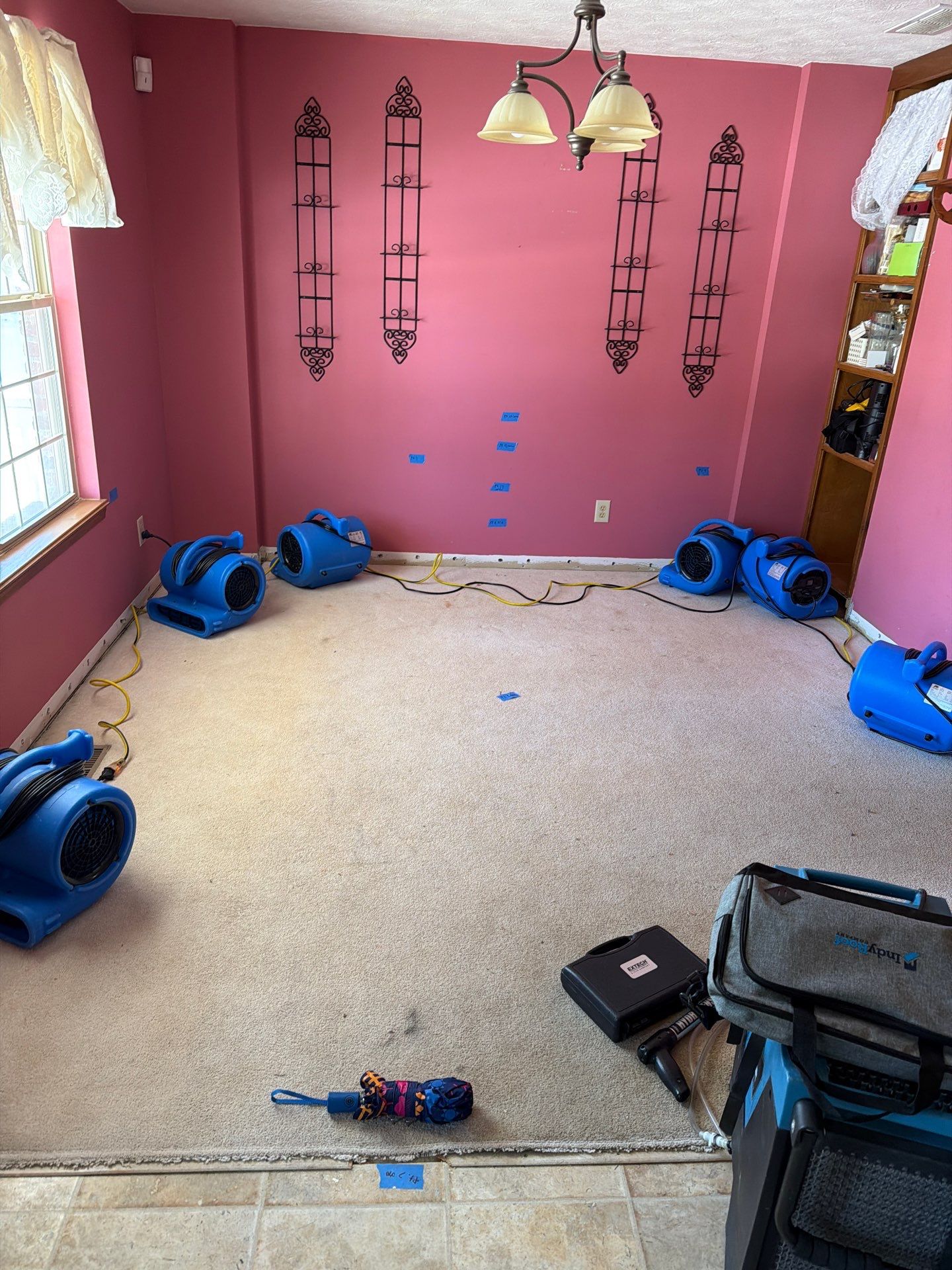
Professional drying uses truck-mounted extractors that pull ten times more water than a shop vac, commercial dehumidifiers rated for several hundred pints per day, and moisture meters that read the actual percentage of water inside building materials. A typical Highland Park basement flood that covers four hundred square feet usually runs between 2,500 and 6,500 dollars to mitigate properly, depending on water category, materials affected, and how long the water sat before extraction. If your flood involves sewage, hit the studs, soaked insulation, or sat for more than a day, the do-it-yourself window has closed. At that point, your best move is getting professionals on site, and our basement flooding response team can typically be at a Highland Park address within an hour of your call.
The Days After: Preventing the Second Flood
Once the basement is dry and the repairs are scheduled, the work is not quite finished. Almost every basement flood we respond to in Highland Park has a preventable root cause, and homeowners who skip the post mortem tend to call us again within two or three years. Test your sump pump by pouring a five gallon bucket of water into the pit and confirming it cycles on, pushes water out, and shuts off cleanly. If it hesitates, hums, or runs continuously, replace it before the next storm. Check that the discharge line carries water at least ten feet away from the foundation and is not buried under mulch or pointed at a neighbor's lot. Walk the perimeter of the house and look for downspouts dumping water within a foot of the wall, grading that slopes toward the foundation instead of away, and window wells full of leaves. Small corrections in these areas are the cheapest flood insurance you will ever buy, and they make the difference between a one time emergency and a recurring nightmare.