Commercial Flood Damage Cleanup in Highland Park, IN
Phased reopening backed by moisture readings per zone, on commercial flood losses throughout Highland Park and Johnson County.
Highland Park Water Restoration provides professional Commercial Flood Damage Cleanup in Highland Park: emergency availability every day of the year, certified crews, and coordination with your insurance carrier on approved claims. Call (765) 436-6771.
- Service: Commercial Flood Damage Cleanup for Highland Park homeowners
- Service area: Highland Park, IN and surrounding areas
- Response time: 24/7 answering with priority emergency dispatch across Highland Park
- Licensed and insured (License #RC21100059)
- Serving Highland Park, IN since 2018
Commercial Flood Cleanup in Highland Park
We'll pump out and dry commercial buildings in Highland Park after floodwater gets inside.
Flood Exposure Here
Flood risk here runs highest for sites close to the Little Calumet River. A high water table can hold floodwater against foundations and lower levels. Your building's own flood exposure gets mapped when we walk the site with your facilities contact.
Our flood crews work commercial sites throughout Highland Park, including the blocks around the Highway Avenue downtown district and the Cline Avenue commercial corridor. We also handle commercial flood cleanup in Hammond, Merrillville, Dyer and Schererville.
Commercial Flood Damage Cleanup for Highland Park Businesses
When a creek leaves its banks and reaches your parking lot, the water enters at the lowest door it can find. The waterline on the walls shows how high it rose, and the silt on the floor shows what it carried in. Highland Park Water Restoration pumps out commercial buildings in Highland Park first, then measures everything that waterline touched.
Areas that took on floodwater need a controlled way in, so Highland Park Water Restoration sets barriers and signage at the edge of the work zone on commercial floods in Highland Park and marks a single entry with a wash station for boots and tools. An entry log shows who went in, and the boundary moves as each section reaches dry standard.
Pumped floodwater needs somewhere approved to go, and that gets settled before the first pump starts. The crew confirms with the property manager and the local utility where floodwater from your Highland Park site may be discharged, because contaminated water can follow different rules than clean water. Hoses get routed away from the building and from neighboring properties, and the discharge point goes in the job file.
Coverage for standing water depends on where the water came from and on your policy, and your carrier answers that question. Highland Park Water Restoration documents the cause and the full extent of the loss on your Highland Park property, so the facts are in place whichever policy responds. Your broker can walk you through how your forms treat the source of the water.
Carpet, cushion, drywall and insulation that sat in floodwater are headed for the dumpster, and the record of what left is easiest to build while it's happening. Call Highland Park Water Restoration before demolition starts, and the crew photographs and logs each area of your Highland Park property as the material comes out.
Signs You Need Commercial Flood Damage Cleanup
If you notice any of these in your Highland Park building, schedule a free inspection before the issue worsens.
Silt packed into trench drains and floor drains after a flood
Creek or retention pond water that has crested its banks and is still rising near the building
Dried silt leaving gray dust on shelving and walls once the floor surface dries
A dark tide line on drywall or wall base running along a corridor at a consistent height
Beads of moisture under plastic sheeting or mats taped to a concrete floor for a day or two
Visible water or damp conduit inside an electrical room, or a panel with moisture at the base
Dock seals and door thresholds showing silt or a waterline after a heavy rain
Brown waterline marks across the walls of a lower level at the same height in every room
Standing water in an underground parking level with an oily film on the surface
Water staining on stairwell walls or landings leading down to a basement or garage level
How Highland Park Water Restoration Handles Commercial Flood Damage Cleanup
We follow these steps in order on every Highland Park job.
Staged Water Drawdown
Below grade levels get pumped down in stages while the soil outside is still saturated. The crew pauses between passes to check walls and slab, and logs the water level each time.
Content Pack Out
Fixtures, records, equipment and stock come off the wet slab and get listed by item and condition. Anything needing controlled conditions goes to climate controlled storage under a numbered list, so what left the building is documented before it moves anywhere.
Cleaning the Structure
Concrete and block that stood in floodwater are washed with detergent from the top of the wall down and rinsed out. An antimicrobial treatment follows when the scope includes one, so drying starts on a clean surface.
HVAC Coordination
The crew works with building engineering to set the air handlers where they support drying and keep humid air out of unaffected areas. Ductwork and units that sat in water get flagged for your HVAC contractor to check before the system goes back into service.
Phased Section Release
Areas that reach dry standard get released back to use while the crew keeps working sections that still hold moisture. Each release carries the readings for that zone, which lets the property come back in pieces as the building and your own occupancy requirements allow.
Commercial Flood Damage Cleanup in Highland Park
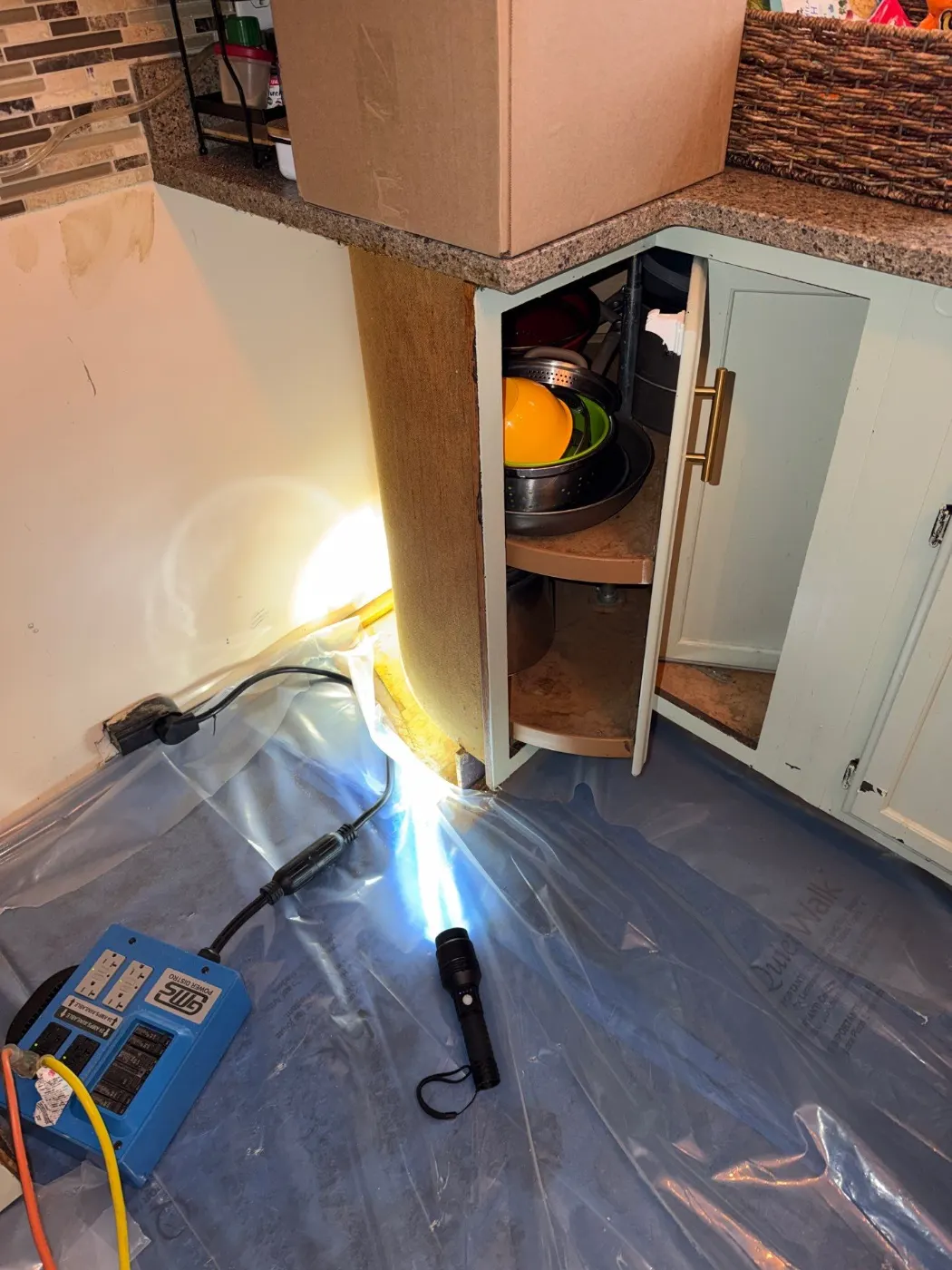
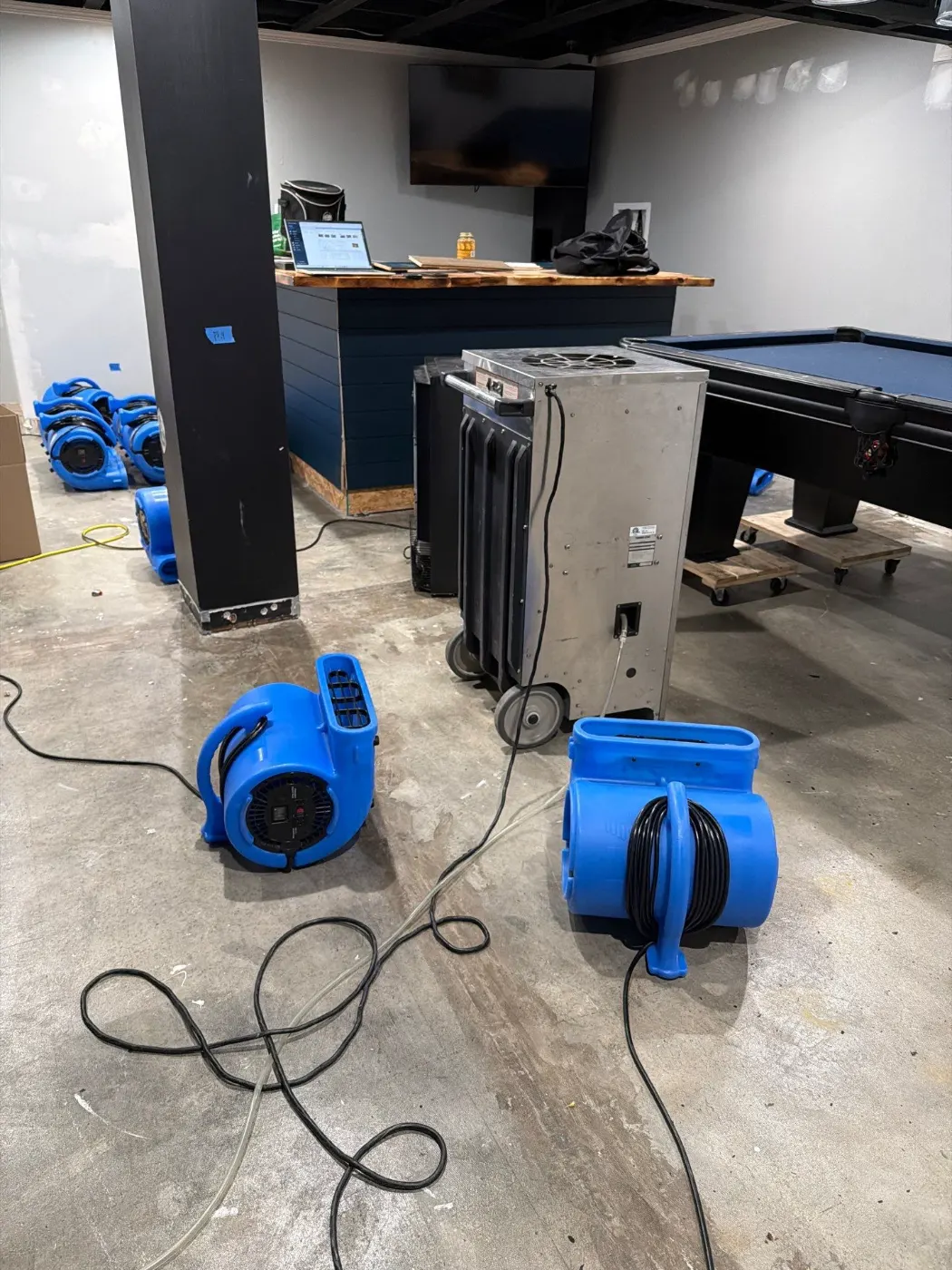
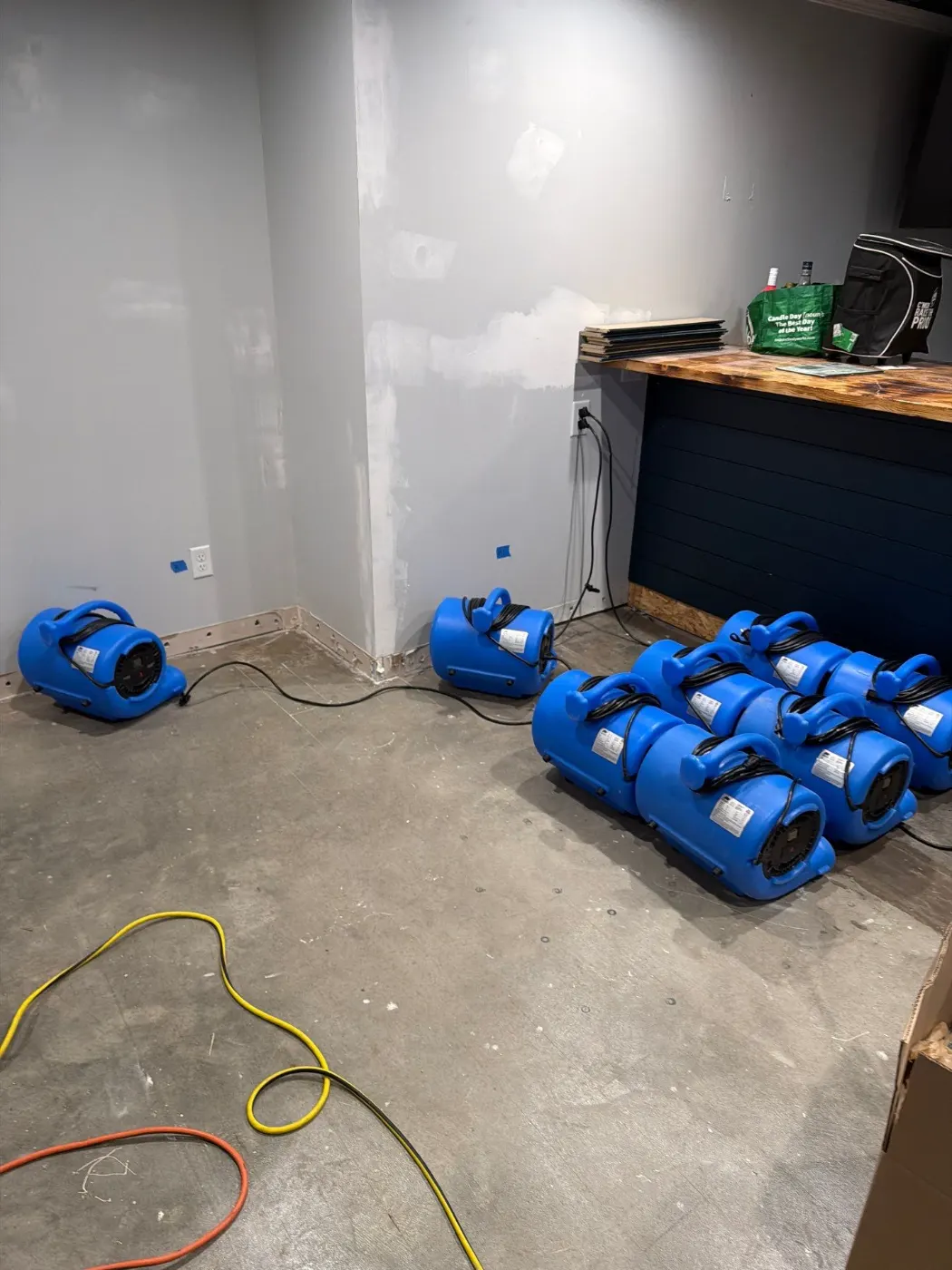
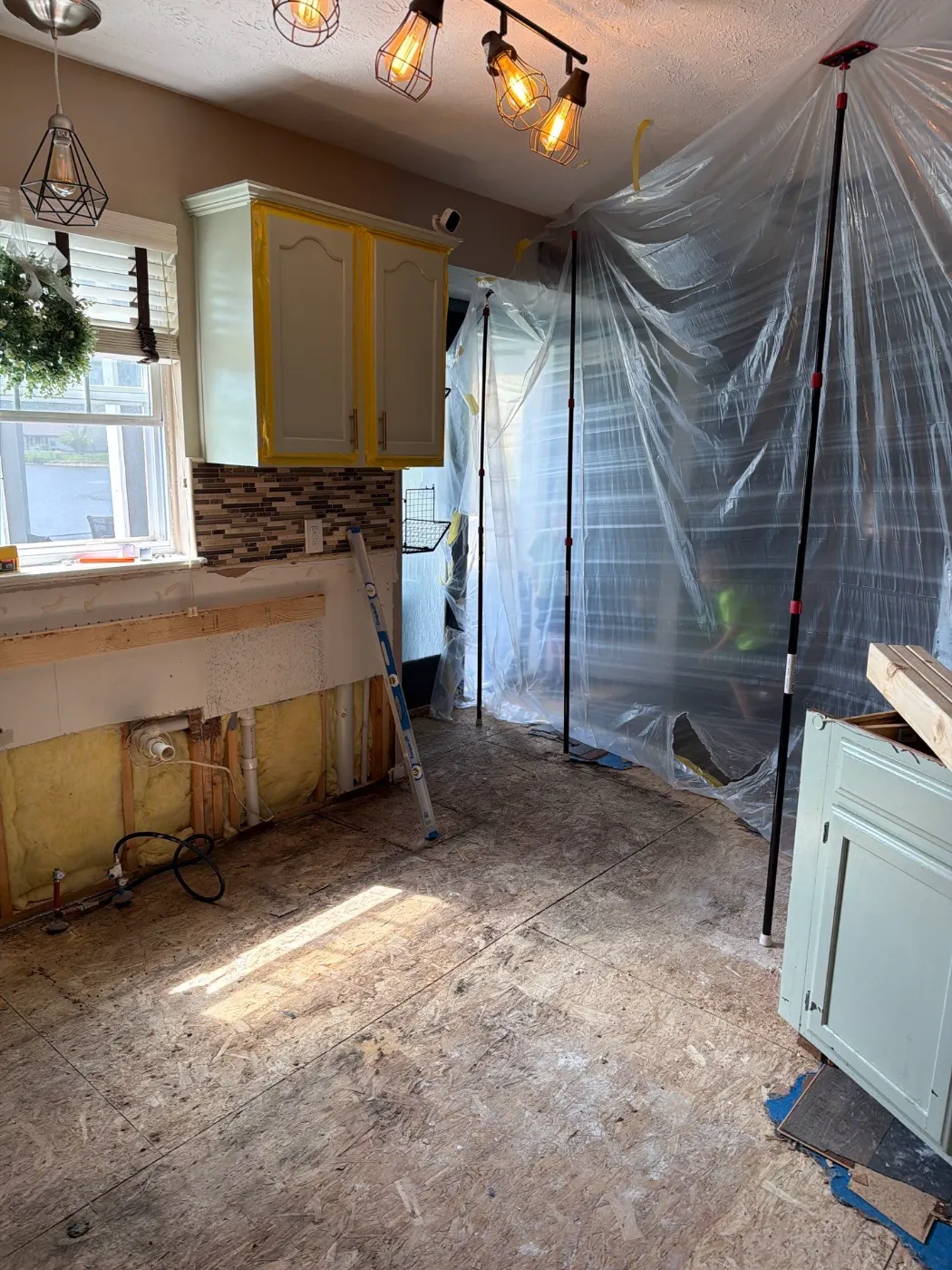
Photographs from real commercial flood damage cleanup jobs completed by our crew in Highland Park and surrounding areas.
Commercial Flood Damage Cleanup FAQ
Questions Highland Park property managers ask us about commercial flood damage cleanup.
Guidance and Standards for Commercial Flood Damage Cleanup
- The ANSI/IICRC S500 is the published standard for professional water damage restoration. The current edition is the Fifth Edition, 2021. IICRC S500 Standard
- EPA advises drying water damaged areas and items within 24 to 48 hours to prevent mold growth. EPA: A Brief Guide to Mold, Moisture and Your Home
Highland Park Neighborhoods We Serve
We take commercial flood damage cleanup calls in every part of Highland Park. Pick your neighborhood for local details.
Other Restoration Services in Highland Park
Highland Park Water Restoration handles the full scope of restoration work. Explore our other services below.
Water Damage Restoration in Highland Park
24/7 emergency response. IICRC certified water restoration from extraction to full dry out.
Learn more →Basement Flooding in Highland Park
Basement water emergencies handled fast. Extraction, drying, mold prevention.
Learn more →Sewage Cleanup in Highland Park
Category 3 biohazard cleanup. Full containment, decontamination, structural restoration.
Learn more →Request Commercial Flood Damage Cleanup
Reach Us Directly
Our team is available 24/7 for emergencies and ready to schedule inspections during business hours.
Need Immediate Help?
For active water or mold emergencies, call us directly. We are available 24/7.