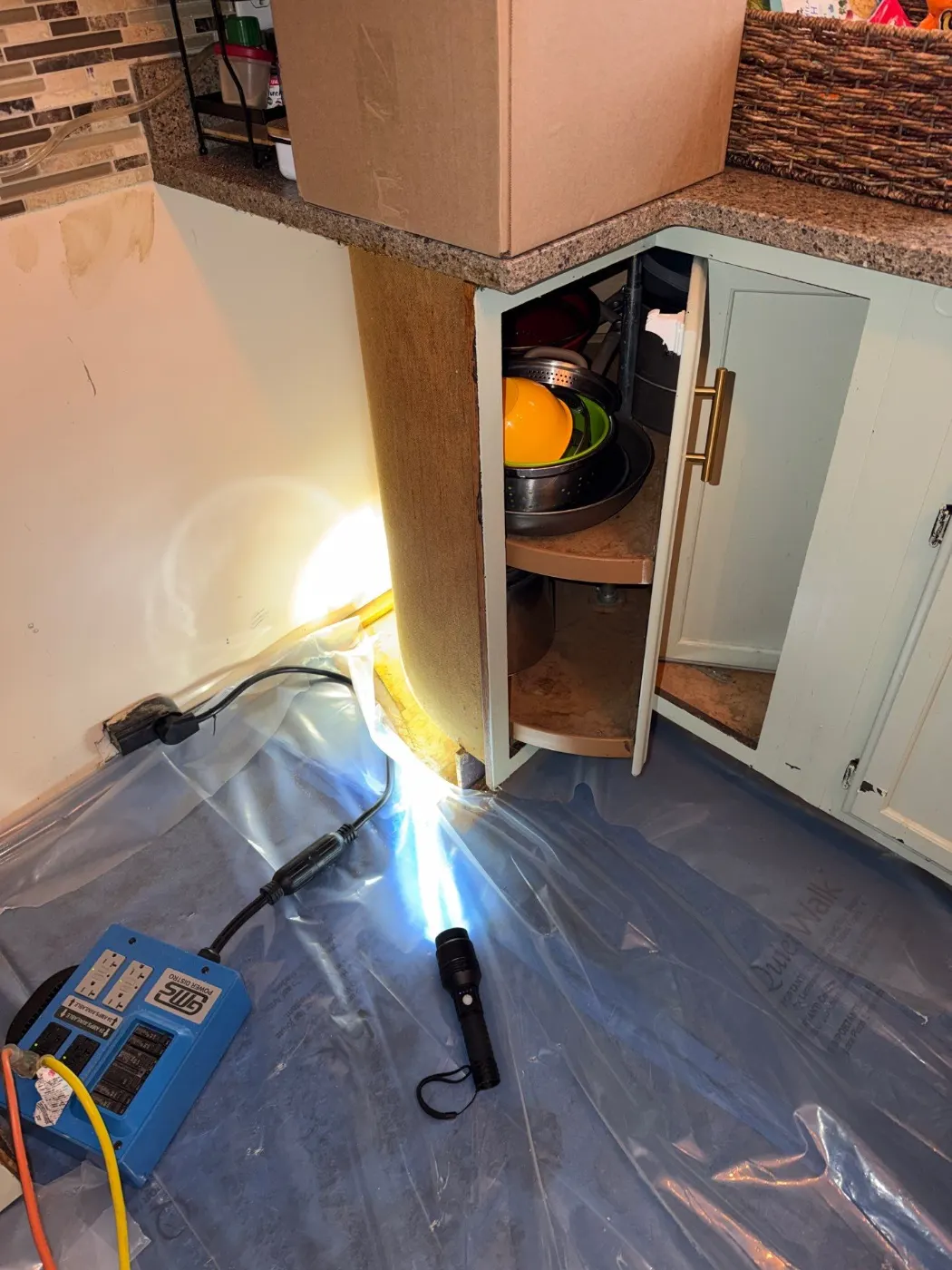
Commercial Storm Damage in Highland Park, IN
Commercial storm response for Highland Park, IN, with two hour dispatch and moisture readings keyed to your floor plan.
When Highland Park homeowners need Commercial Storm Damage, Highland Park Water Restoration responds 24/7 with certified technicians, fast equipment deployment, and claim ready documentation. Call (765) 436-6771 for immediate dispatch.
- Service: Commercial Storm Damage for Highland Park homeowners
- Service area: Highland Park, IN and surrounding areas
- Response time: Around the clock dispatch; Highland Park emergencies move to the front of the line
- Licensed and insured (License #RC21100059)
- Serving Highland Park, IN since 2018
Commercial Storm Damage for Highland Park Businesses
Water through a roof breach tends to find the one room you'd never choose, because electrical rooms and IT closets sit under the mechanical penetrations. Power gets shut off and the business stops before the water damage even registers. A crew dispatches to commercial intrusion in Highland Park within two hours, pulls standing water away from equipment first, and works with your electrician on what can safely be reenergized.
Property managers get a daily note from the Highland Park Water Restoration team with yesterday's readings, what moved and what's planned, with photos attached. If a reading goes the wrong way, the note says so and says what's changing. The person who has to brief ownership on a loss in Highland Park gets the numbers before that conversation starts.
Along the glass line of your Highland Park building, the crew checks the fan coil cabinets and floor boxes first, because water collects where they sit. The vinyl base is lifted at intervals so a meter can read the wall behind it, and the slab edge is probed. Readings run along the whole glass line, since the water often travels farther than the visible stain.
If your policy carries business interruption or extra expense coverage, the drying schedule becomes part of that calculation. Highland Park Water Restoration logs which areas were unusable and for how long, with dates and photos, so your accountant and your broker have something to work from. The claim belongs to you and your carrier. The team supplies the facts the file needs and answers questions in writing.
Stopping the water early keeps the reconstruction smaller. Call Highland Park Water Restoration for commercial storm intrusion in Highland Park, IN and a crew dispatches day or night with materials to close the breach and equipment to dry what's already wet. The documentation is built for your carrier.
Signs You Need Commercial Storm Damage Restoration
If you notice any of these in your Highland Park building, schedule a free inspection before the issue worsens.
Insulation batts above the ceiling grid that are compressed, matted, or dripping at the edges
Water dripping from a light fixture, an air diffuser, or a sprinkler escutcheon after a hard rain
Bubbles, blisters, or soft spots underfoot when you walk a low slope membrane
Rust streaks or white efflorescence running down an interior wall below a parapet line
A supply diffuser dripping water or showing rust streaks after a storm
Tenants moving stock or equipment away from a wall because water keeps showing up there
Roof drain piping dripping at a joint inside a chase or above the ceiling
Standing water ponding on the roof more than two days after the rain stopped
Open seams, shrinkage at a membrane lap, or a corner of the roof lifting in wind
Ceiling tiles sagging, stained brown at the center, or crumbling along the grid in one area of a floor
How Highland Park Water Restoration Handles Commercial Storm Damage
We follow these steps in order on every Highland Park job.
Power and Safety Walk
Before extraction starts, the crew walks the wet areas with your building engineer and confirms which circuits serve them. Cords run through ground fault protection, and the electrician decides what can be reenergized.
Water Path Check
The crew traces the water from the roof breach down through the ceiling to the floors below and photographs the path. Water that backed up out of a drain tied into a sanitary line gets handled as sewage, and that call drives the protocol.
Extraction and Debris Removal
Standing water comes off floors with portable and truck mounted units. Saturated lay in tile and wet batt insulation get bagged and hauled out. Water held in the plenum is released through controlled openings so it stops dripping onto tenant equipment.
Occupied Space Planning
Suites and corridors that must stay in service get marked on the plan before any equipment is staged, along with where the barriers go. The loud work is scheduled for hours when the space is empty.
Containment and Air Control
Barriers go up at a corridor wall or partition line so one wet bay doesn't shut a whole floor. Negative air machines with HEPA filtration run where materials are coming out, and the crew keeps equipment clear of egress paths.
Commercial Storm Damage in Highland Park
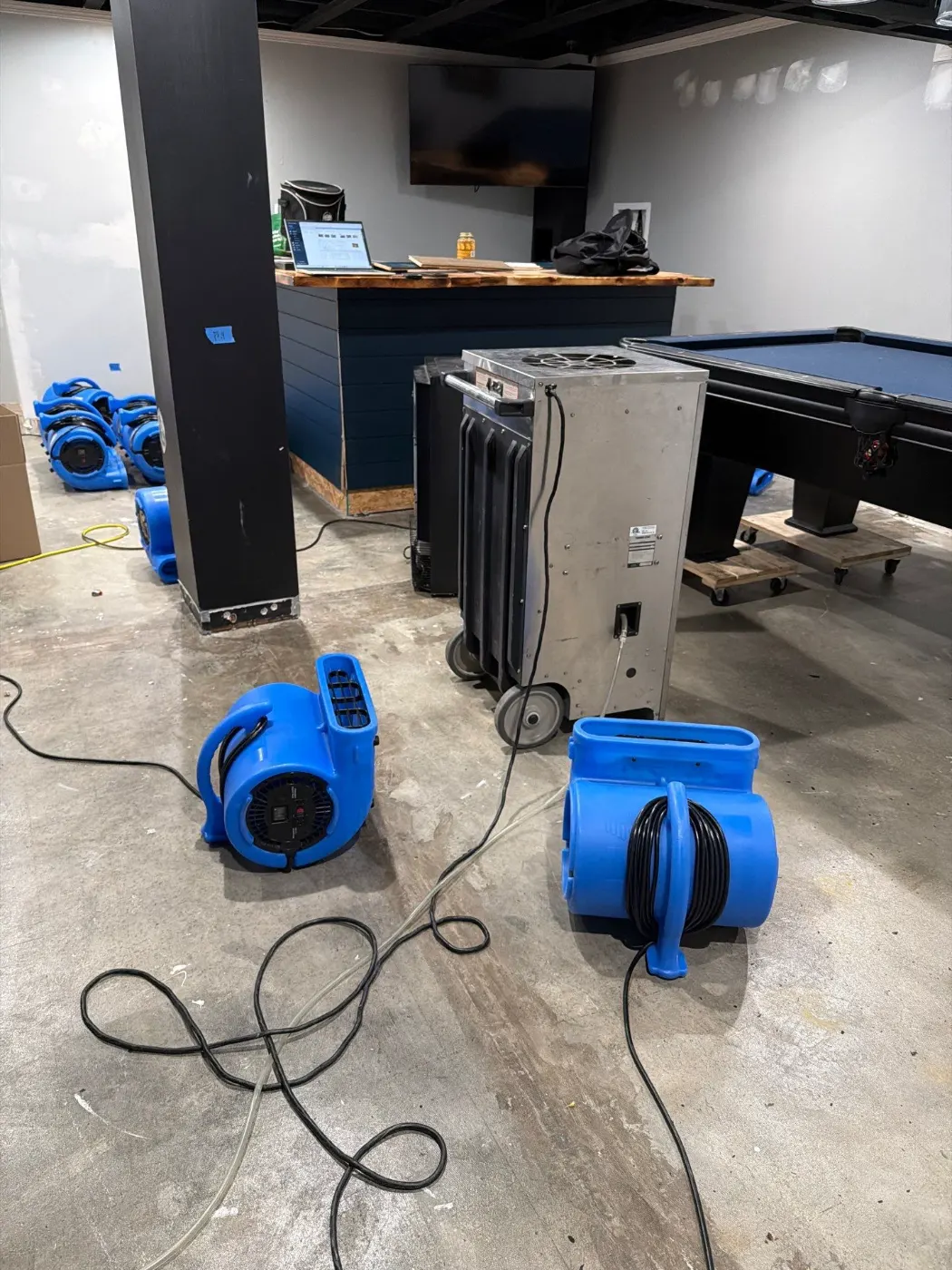
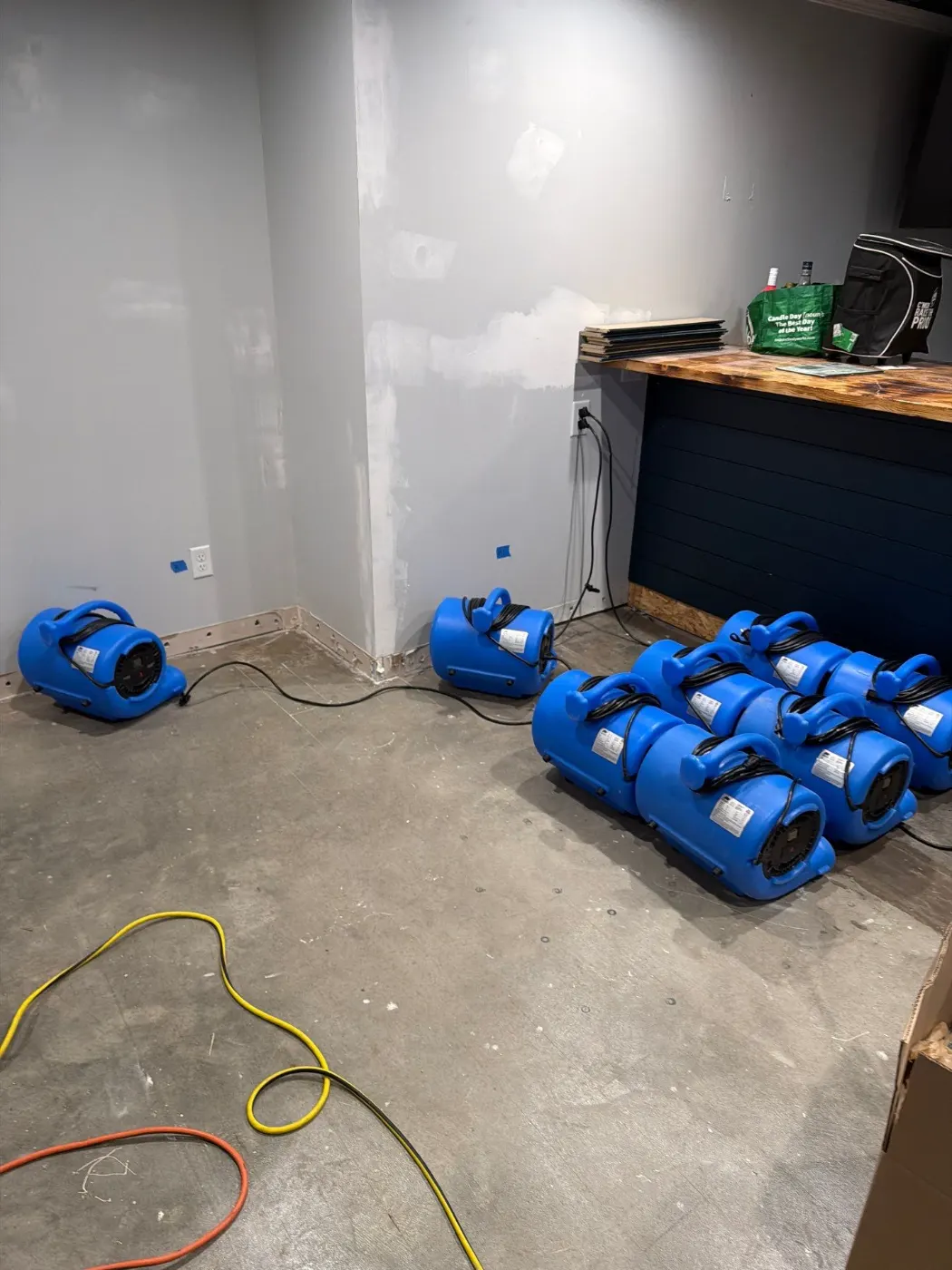
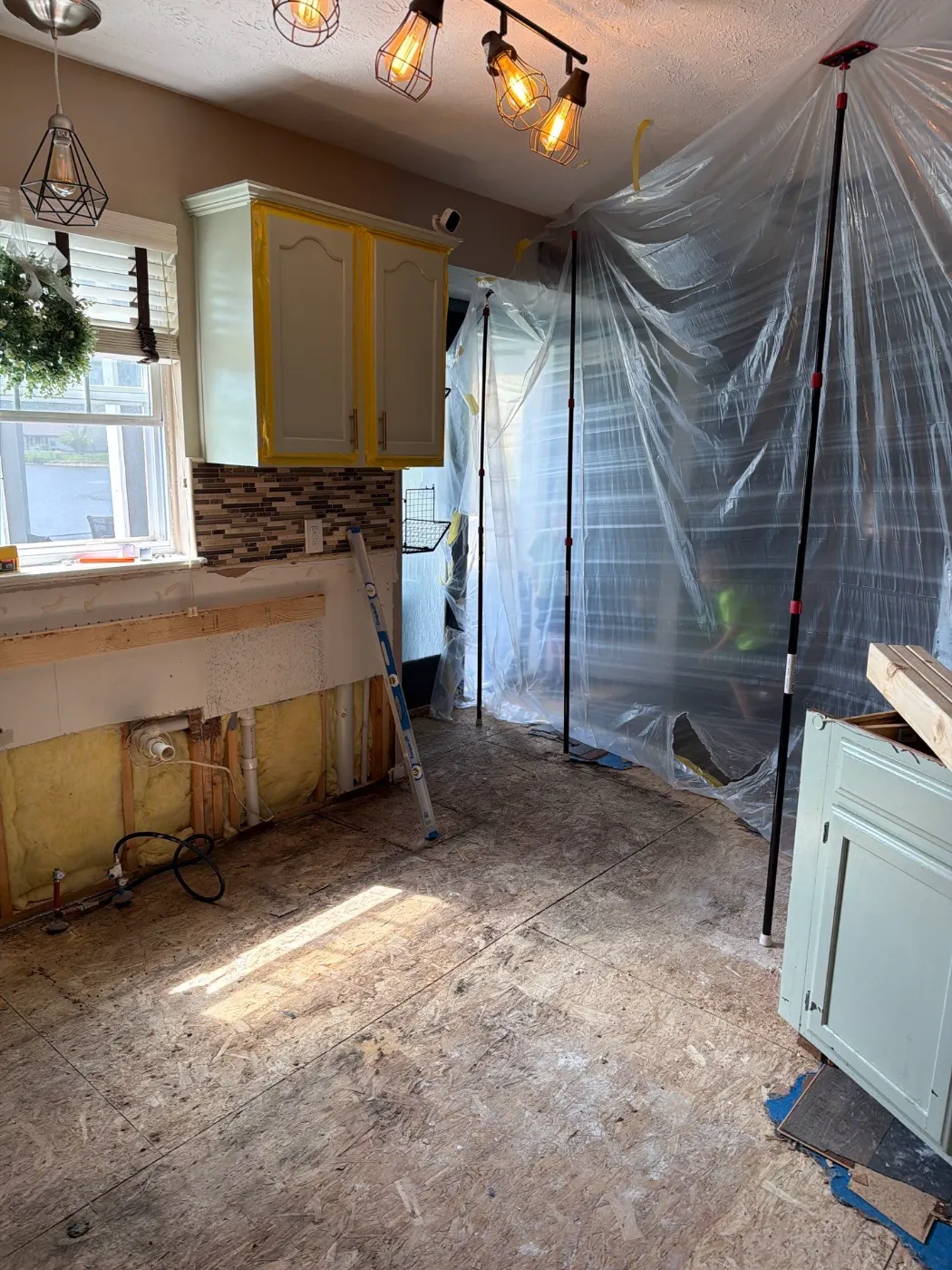
Photographs from real commercial storm damage jobs completed by our crew in Highland Park and surrounding areas.
Commercial Storm Damage FAQ
Questions Highland Park property managers ask us about commercial storm damage restoration.
Guidance and Standards for Commercial Storm Damage
- The National Weather Service office in Indianapolis posts summaries of recent central Indiana storm and flood events. NWS Indianapolis Event Summaries
- The ANSI/IICRC S500 is the published standard for professional water damage restoration. The current edition is the Fifth Edition, 2021. IICRC S500 Standard
Highland Park Neighborhoods We Serve
We take commercial storm damage calls in every part of Highland Park. Pick your neighborhood for local details.
Other Restoration Services in Highland Park
Highland Park Water Restoration handles the full scope of restoration work. Explore our other services below.
Water Damage Restoration in Highland Park
24/7 emergency response. IICRC certified water restoration from extraction to full dry out.
Learn more →Basement Flooding in Highland Park
Basement water emergencies handled fast. Extraction, drying, mold prevention.
Learn more →Sewage Cleanup in Highland Park
Category 3 biohazard cleanup. Full containment, decontamination, structural restoration.
Learn more →Request Commercial Storm Damage Restoration
Reach Us Directly
Our team is available 24/7 for emergencies and ready to schedule inspections during business hours.
Need Immediate Help?
For active water or mold emergencies, call us directly. We are available 24/7.